Mobile Home Removal vs Demolition: Which Is Right?
You need a mobile home gone. But do you have it moved somewhere else, or demolished on site? Both options get the same end result—an empty lot—but they work very differently and have different cost implications.
Here's how to figure out which approach makes sense for your situation.
What's the Difference?
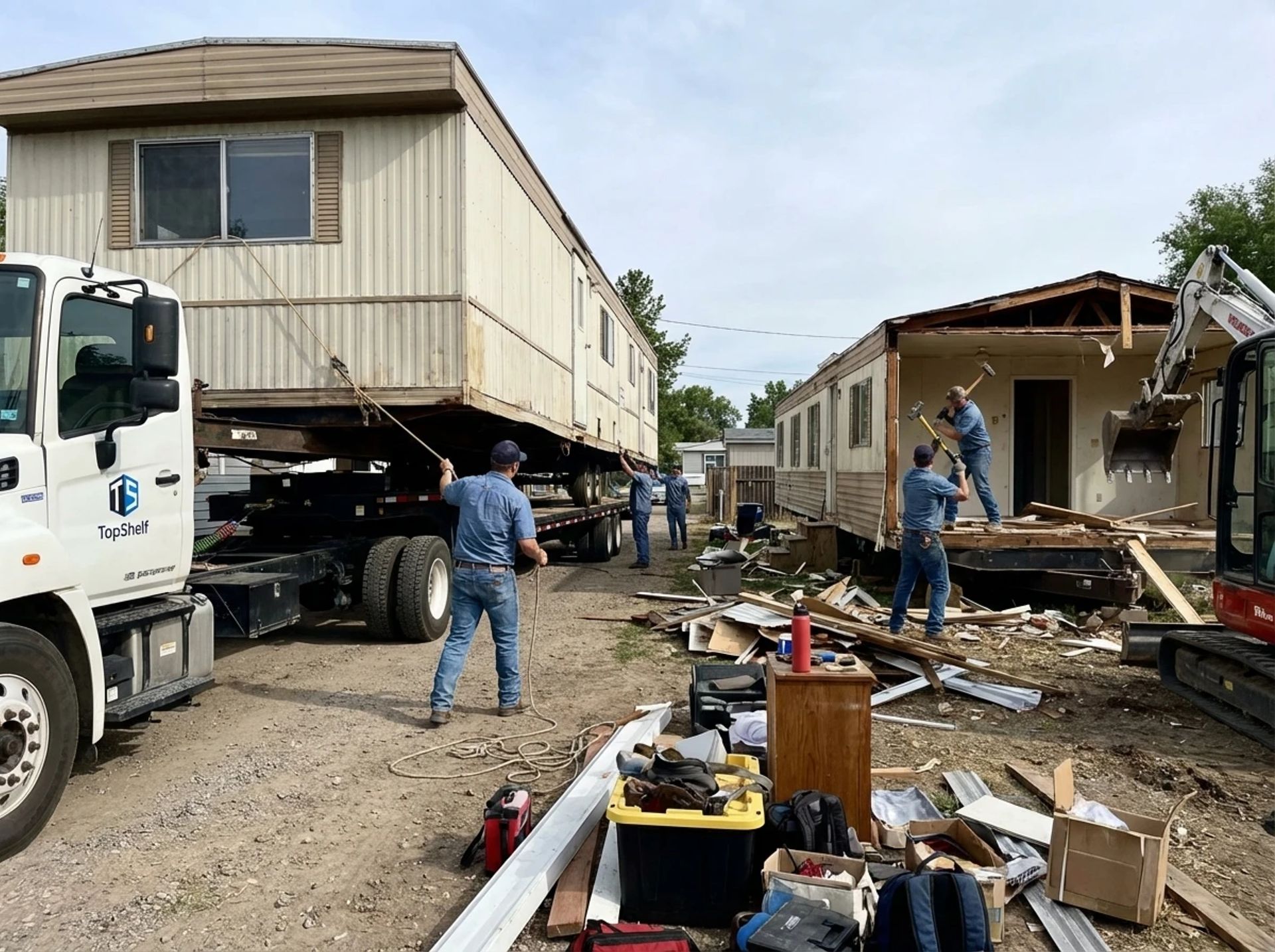
Removal (also called relocation): The mobile home is lifted off its foundation, placed on a transport trailer, and moved to a new location. The structure stays intact. Someone else ends up with the home—either as a buyer, donation recipient, or someone who wants it for another purpose.
Demolition: The mobile home is torn down on site. Materials are hauled away, with recyclable components (metal, appliances) separated from materials bound for the landfill. Nothing remains but the foundation—which may also be removed.
Both end with an empty lot. The question is which path gets you there.
When Removal Makes Sense
Relocation works best when certain conditions are met:
If you can find a buyer, removal might cost you nothing—or even make you money. But that "if" is often the catch.
When Demolition Makes Sense
Demolition is usually the practical choice when:
The home is in poor condition. Water damage, structural problems, mold, outdated systems—no one wants to buy or move a home that needs more repairs than it's worth.
It's an older model. Pre-1976 mobile homes were built to different (lesser) standards. Finding someone to move them—and finding a place that'll accept them—is difficult.
Access is limited. Narrow driveways, overhanging trees, tight turns, low power lines—if a transport trailer can't get in and out, removal isn't an option.
No buyer interest. If you've tried to give it away and can't find takers, demolition is the realistic path forward.
You're in a hurry. Demolition can typically be scheduled within days to weeks. Finding a buyer and coordinating removal can take months—if it happens at all.
Cost Comparison
Costs vary widely, but here's the general picture in the Treasure Valley:
Removal costs (if you pay for it): Depends on distance, home size, and complexity. Transport permits, pilot cars, and site prep add up. Most people who pay for removal do so because they're relocating the home themselves.
Removal costs (if you find a buyer): Zero to you—possibly even a sale price—if someone wants the home and will pay for moving it. But finding that buyer isn't guaranteed.
Demolition costs: For most mobile homes in the Boise area, the price includes hauling and disposal. Double-wides or homes with complications run higher than single-wides.
The math often favors demolition unless you actually have a buyer lined up. Searching for a buyer who may not exist wastes time and prolongs the problem.
The Removal Reality Check
Many people assume they can sell or give away their mobile home to avoid demolition costs. Sometimes that works. Often it doesn't:
The used mobile home market is tough. Buyers who want older mobile homes can usually find them cheaper already in place at mobile home parks.
Move-in ready parks are picky. Many parks won't accept homes older than 10-15 years. Older homes have fewer places they can legally be placed.
Moving costs are high. Even if the home is free, the move itself costs thousands. That limits your buyer pool to people with both land and moving budget.
Time costs money too. Every month you spend looking for a buyer is another month of property taxes, lot rent (if applicable), and delayed plans for your property.
How to Decide
Ask yourself these questions:
Is the home in movable condition? If it's falling apart, removal isn't realistic anyway.
Do you already have a buyer or recipient? If yes, explore removal. If you're hoping to find one, be realistic about your timeline.
How urgent is this? If you need the lot cleared soon—for a sale, new construction, or code compliance—demolition is more predictable.
What's the home's age? Pre-1976 homes are almost always demolition candidates.
Can transport access your site? If getting a mobile home out would require moving power lines or removing fences, factor that into the cost comparison.
The Bottom Line
Removal is great when it works—you might get paid, or at least avoid demolition costs. But it only works when the home is in good condition, transportable, and someone actually wants it.
For most mobile homes in the Treasure Valley—especially older ones or those in poor condition—demolition is the practical path forward. It's a known cost on a predictable timeline.
Not sure which option fits your situation? We can take a look and give you an honest assessment of your options.
Need Help Deciding?
We can assess your mobile home and give you a realistic picture of your options. Free estimates, honest advice.
Call (208) 247-3193