What Happens to Materials from Demolished Mobile Homes?
A mobile home gets demolished. Walls come down, roof gets torn apart, everything gets loaded into trucks and hauled away. But then what? Does it all just end up in a landfill?
Actually, a significant portion of mobile home materials can be recycled or repurposed. Here's what happens to the debris after your mobile home is demolished.
What Mobile Homes Are Made Of
Understanding the materials helps explain recycling potential:
Steel frame and chassis. The structural backbone of every mobile home. This is the most valuable recyclable material—steel framing, axles, hitches, and the I-beam chassis.
Wood framing and subflooring. Interior walls, roof trusses, and floor structure are typically wood. Condition determines recyclability.
Metal roofing and siding. Aluminum and steel exterior panels. These are easily recycled.
Copper wiring and plumbing. Valuable scrap metal found throughout the home.
Appliances, fixtures, windows. These contain mixed materials with varying recycling potential.
What Gets Recycled
Materials commonly recycled from mobile home demolitions:
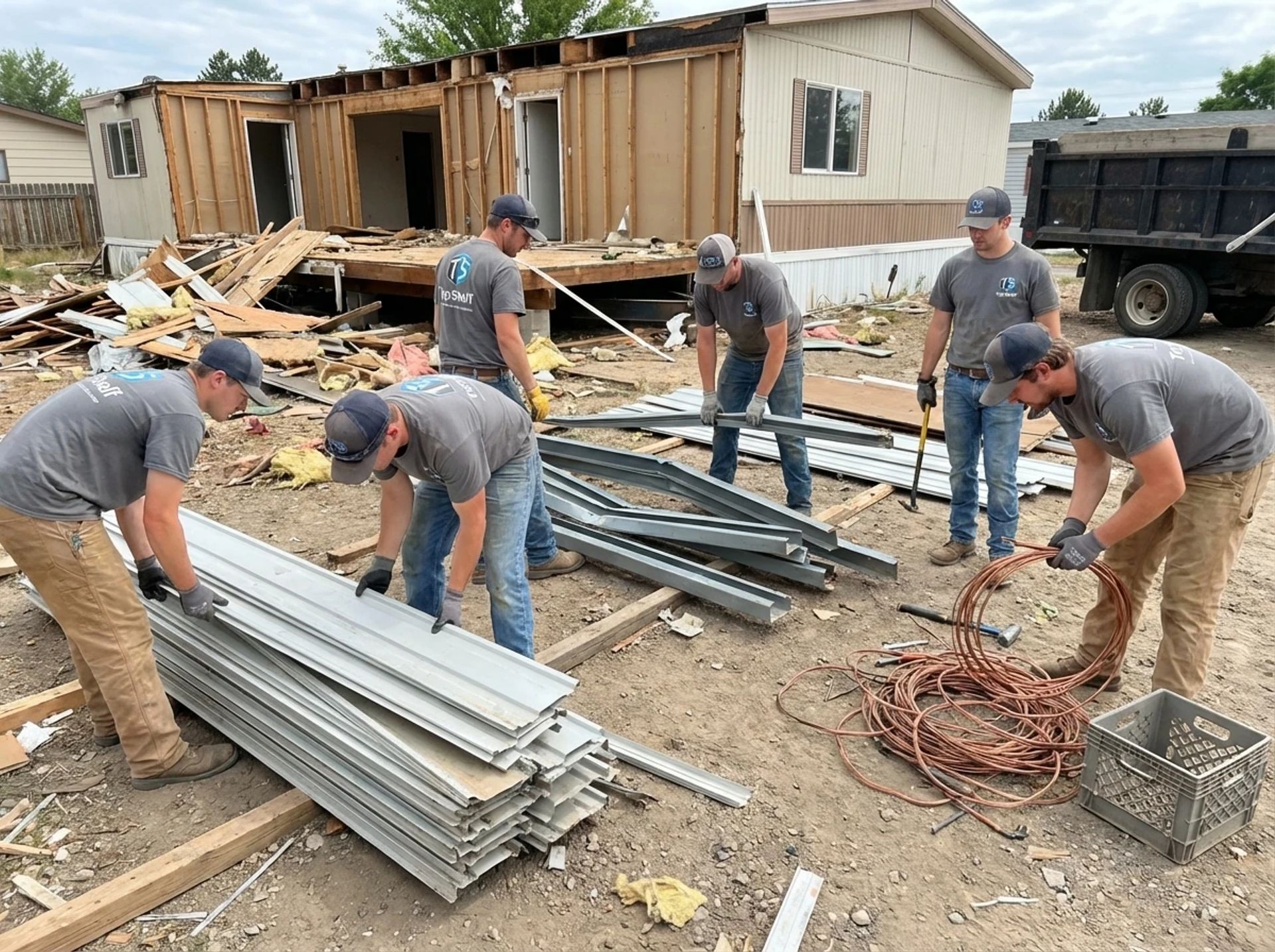
Responsible demolition contractors separate these materials during the demolition process rather than sending everything to the landfill.
What Typically Goes to Landfill
Some materials aren't practically recyclable:
Insulation. Fiberglass batts and blown-in insulation typically go to the landfill. They're bulky and don't have recycling value.
Interior paneling and drywall. The composite materials and finishes in mobile home walls usually aren't recyclable.
Vinyl flooring and carpet. These end up as landfill material in most cases.
Damaged or contaminated wood. Water-damaged, rotted, or treated wood usually can't be recycled.
Mixed debris. When materials are too intermingled to separate economically, they go to the landfill as construction debris.
Hazardous Materials Get Special Handling
Some mobile home materials require special disposal:
Asbestos. Found in some older mobile homes in flooring, insulation, and siding. Must be removed by licensed abatement contractors and disposed of at approved facilities.
Lead paint. Pre-1978 homes may have lead-based paint. Requires careful handling to prevent contamination.
Refrigerants. Air conditioners and refrigerators contain refrigerants that must be recovered, not released. Appliance recyclers handle this.
Mercury switches and thermostats. Older thermostats and some electrical switches contain mercury. These get separated for proper disposal.
How Materials Get Sorted
Demolition contractors use different approaches to material separation:
On-site sorting. Metals are separated during demolition and loaded onto separate trailers. This is most efficient for high-value materials like copper and aluminum.
Transfer station sorting. Some contractors haul mixed loads to facilities where materials are sorted. This works for lower-volume recycling.
Salvage before demolition. Valuable items like working appliances, fixtures, or architectural elements may be removed intact before demolition begins.
Scrap yard processing. Steel and aluminum loads go to scrap yards where they're further processed for industrial recycling.
Where Treasure Valley Materials Go
Local destinations for mobile home demolition materials:
Scrap metal recyclers. Several facilities in the Boise area accept steel, aluminum, copper, and other metals from demolition projects.
Appliance recyclers. Specialized facilities handle refrigerators, stoves, and other appliances, recovering metals and properly disposing of hazardous components.
Ada County Landfill. Non-recyclable construction debris goes to Hidden Hollow Landfill or appropriate transfer stations.
Hazardous waste facilities. Asbestos and other hazardous materials go to specially permitted disposal facilities.
The Environmental Bottom Line
How much actually gets recycled?
A typical mobile home demolition recovers roughly 50-70% of materials by weight for recycling when done by a conscientious contractor. The steel frame alone represents a significant portion.
Metal recycling has real environmental benefits—recycled steel requires 60% less energy than producing new steel from ore. Aluminum recycling saves even more energy.
Choosing a demolition contractor who separates and recycles materials is better for the environment than one who dumps everything at the landfill. It can also affect your price, since scrap metal has value.
The Bottom Line
Mobile home demolition doesn't have to mean everything goes to the landfill. Steel, aluminum, copper, and appliances are commonly recycled. Hazardous materials get proper handling. What remains goes to appropriate disposal facilities.
When getting demolition quotes, ask about the contractor's recycling practices. Responsible contractors separate materials as part of their standard process.
We prioritize recycling valuable materials from every mobile home we demolish in the Treasure Valley. It's better for the environment and keeps disposal costs down.
Need Mobile Home Demolition?
We handle demolition responsibly—recycling what we can and properly disposing of the rest. Serving Boise, Meridian, Nampa, and the Treasure Valley.
Call (208) 247-3193