Manufactured Home Demolition Boise: Add-On Rooms and Carports
If you're planning mobile home demolition in Boise, take a slow walk around the lot before you call anyone. On a lot of older trailers, you'll find something that didn't come from the factory.
Maybe it's a bedroom someone framed onto the side years ago. Maybe it's a metal carport bolted to the roof edge, or an awning that's been sagging since before you owned the place.
Those add-ons need their own plan. Sometimes they change the job more than the home does.
Why add-ons change a mobile home demolition in Boise
A manufactured home is built to be moved. It has a steel frame, it sits on piers, and it usually comes apart in a fairly predictable way.
Additions don't.
A stick-built room is put together like a small house. It often has its own footings or a slab, and its roof may be tied into the home's roofline with flashing, framing and a lot of sealant.
When the home comes out, that room can't roll away with it. It has to come down piece by piece and get hauled separately.
Carports and awnings vary. Some stand on their own, with posts set in concrete. Others are fastened to the home and lean on it for support.
Take the home away and an attached awning can lose half of what's holding it up. That's why it gets a close look before anyone touches a wall.
Is that room original, or was it added later?
It's not always obvious from the yard. But there are tells.
The siding doesn't match, or the roof pitch changes right where the room meets the trailer. Inside, the floor steps up or down at a doorway that used to be an outside wall.
Underneath is the giveaway. An addition usually sits on a different foundation than the piers and runners under the home.
Why does it matter? The addition may need to come down before the home can be separated and moved out.
The materials are different too. Lumber, drywall, shingles and concrete each get handled their own way, and some of it can be donated or recycled instead of heading to the landfill.
Heads up: Older siding, flooring and popcorn ceiling texture can contain asbestos, and an addition may be older than it looks. Have it checked before anything gets cut, pried or broken, especially if you were planning to pull some of it down yourself.
Permits for a manufactured home demolition with additions
In Idaho, the demolition permit comes from whichever building department covers your address. Boise has its own process, a property inside Meridian or Nampa goes through that city, and unincorporated land out past Kuna or Star falls under the county.
An attached room is a structure. So is a carport with posts in concrete. Depending on where you live, they may need to be listed on the demolition permit along with the home.
If the addition was permitted when it went up, there may be a record of it. If it wasn't, the building department still expects it to come down properly.
Living in a park? Check with the park manager too. Many parks have their own rules about what's left on the space after a home goes.
Some want every post, slab and footing gone. Others are fine with a concrete pad staying put.
What happens to the slab, posts and footings
This is the part people forget. Taking down the walls and roof of an addition is only half the job.
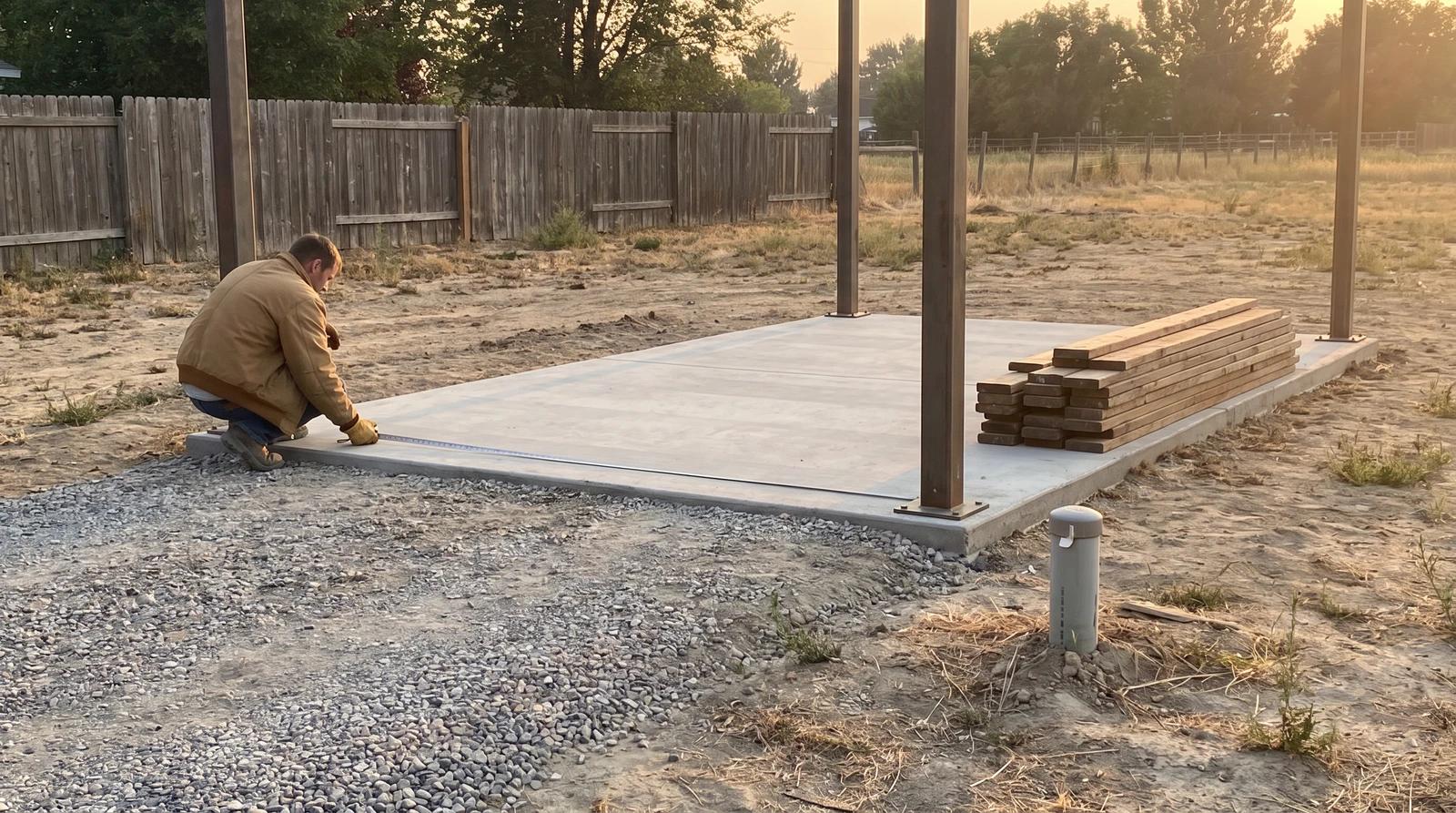
If the room sat on a slab, that concrete is still there afterward. Same with carport posts set in concrete and old porch footings.
Whether those come out depends on what's next for the lot. A new home usually needs a clear, level pad so the setup isn't fighting old concrete.
If you're selling the land or turning it into yard, you might want everything gone. And if a slab is solid and sits in a useful spot, keeping it can make sense.
Concrete is heavy, and breaking it up takes longer than knocking down framing. Decide early, tell us what the lot should look like when we leave, and the price will reflect that.
Weather plays a part
In a hot, dry Boise summer, old shingles and brittle siding break apart easily, and the dust needs managing.
In the middle of winter, frozen ground can make pulling posts and breaking up a slab slower than it'd be in spring. Neither season rules the work out. It just gets factored in.
How add-ons affect mobile home demolition cost
There's no flat rate per home. The quote is based on the space and the work involved, and add-ons are a big part of that.
A stick-built room tied into the roof adds work. So does concrete that has to be broken up and hauled, or a tight park space with neighbors close on both sides. A pile of mixed material that needs sorting adds time too.
On the other side, a freestanding carport that unbolts cleanly comes down quickly. Keeping a slab saves effort. Lumber or metal in good enough shape to donate or recycle beats paying to dump it.
Honestly, the most useful thing you can do before calling anyone is walk the lot and write down every structure on it, even the small ones.
Knowing everything that's there makes a quote accurate. Leaving something off is how surprises happen.
Planning for the whole lot, not just the home
Add-on rooms, carports and awnings are normal on older mobile homes around Boise and the rest of the Treasure Valley. They aren't a problem. They just need to be planned for instead of discovered on demo day.
If you want a firm price that covers the home and everything attached to it, give us a call at (208) 247-3193. We'll come out for a free on-site estimate, look at all of it, and tell you what the job involves before anything gets touched. Cash, card and Venmo all work.
Get a Free Estimate
We'll come look at your mobile home and give you a complete price—no surprises, no hidden fees.
Call (208) 247-3193More From Our Blog
Mobile Home Demolition Boise: Asbestos in Older Trailers
Older trailers can hide asbestos in floors, ceilings and roof coatings. Here's what to check before mobile home demolition in Boise and the Treasure Valley.
Mobile Home Removal Boise: Utilities to Shut Off Before Demo
Before a mobile home comes down in Boise, the power, gas, water and sewer have to be handled. Here's who to call, what to cap, and what slows it down.
Mobile Home Removal in Boise When You Inherit an Old Trailer
Inherited a lot with an old trailer on it? What to sort out before mobile home removal in Boise: ownership, probate, the cleanout, utilities and permits.
