Mobile Home Demolition Boise: Asbestos in Older Trailers
That old single wide on your lot probably has a textured ceiling, a few layers of vinyl flooring and a roof that's been coated more times than anyone can count. Before any mobile home demolition in Boise gets going, there's one question worth asking first: is there asbestos in it?
Nobody likes that question. It adds a step, and it can add cost.
Still, it's a lot better to know before the walls come down than after the dust has drifted across the yard.
Why older trailers deserve a closer look
Asbestos showed up in building materials for decades. It was cheap and it handled heat well, so it ended up in more places than most people would guess.
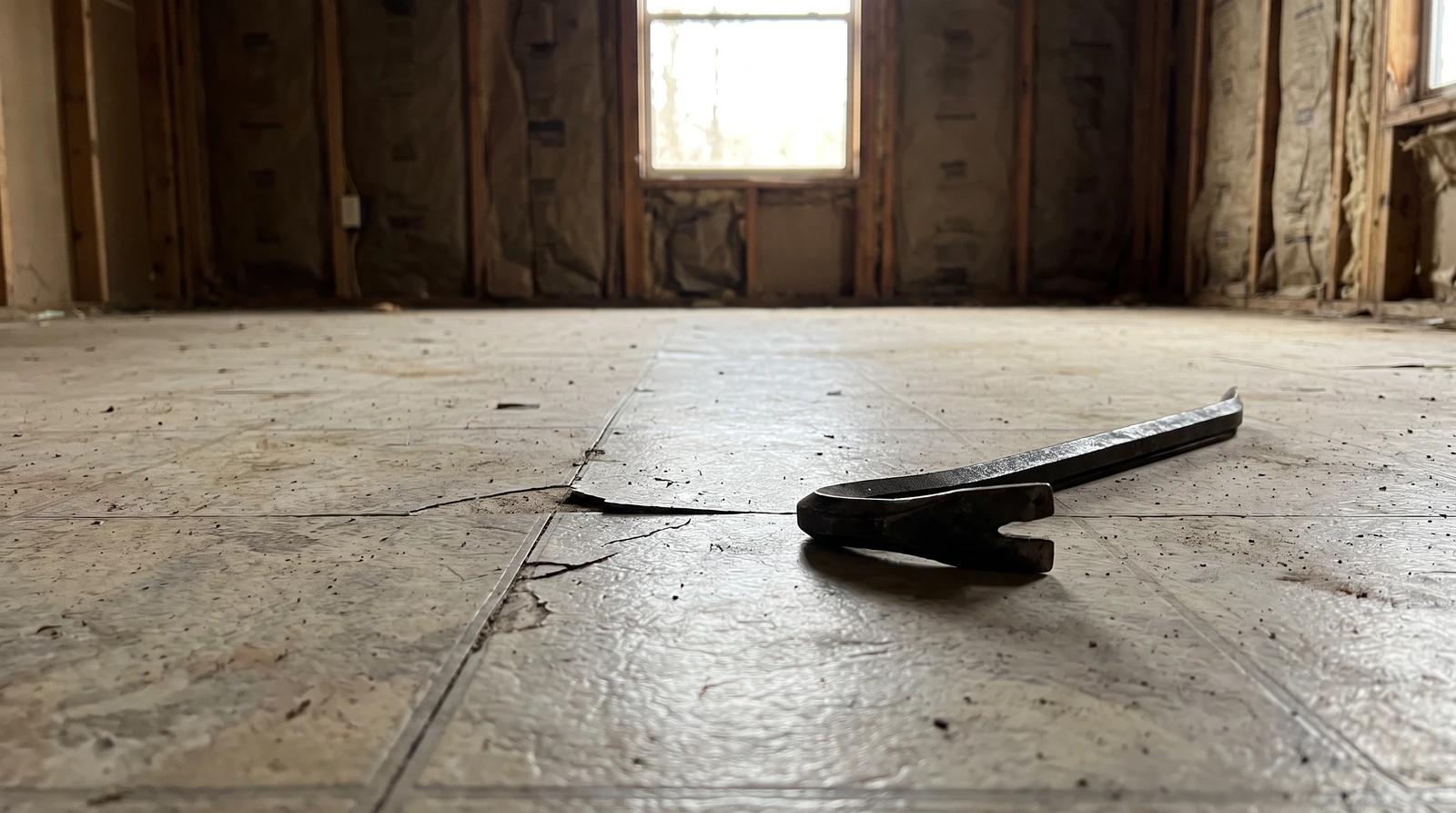
In a mobile home, the first places to wonder about are the floors. Old vinyl tiles and the black glue underneath them are common suspects.
Ceilings come next, especially the popcorn or textured kind. Joint compound along the wall seams can contain it too.
Then there's the stuff you don't see much. Roof coatings, the wrap and tape on old heating ducts, and some older siding and window glazing are all worth testing.
Older homes get the most attention. But age alone doesn't clear a home. A newer trailer can still have an old floor hiding under the new one, or a ceiling somebody patched with leftover material years back.
Here's the part people miss. Asbestos sitting quietly in an intact floor tile isn't the main worry. Asbestos that gets cracked, torn or ground up during a teardown is, because that's when the fibers get into the air.
Testing before mobile home demolition in Boise
You can't tell by looking. There's no color or texture that gives it away, so anyone who says they can spot it on sight is guessing.
The real answer is a test. An accredited asbestos inspector takes small samples from the materials most likely to contain it and sends them to a lab. You get a report back showing what's in the home and what isn't.
What moves the cost and time of an inspection? Mostly the size of the home, how many different materials need sampling and how many additions have been tacked on. A single wide with original flooring is a lot simpler than a double wide with three remodels stacked on top of each other.
If the report comes back clean, the teardown goes ahead like any other.
If it doesn't, those materials have to come out first, handled by a licensed abatement contractor. Abatement is its own trade with its own training and rules, separate from the demolition itself.
Heads up: Don't start pulling up flooring or scraping ceilings yourself to get a head start before the test. Disturbing those materials is exactly what you're trying to avoid, and it can turn a simple inspection into a much bigger cleanup.
Permits and disposal rules around the Treasure Valley
Federal asbestos rules treat a single house a bit differently than a group of buildings cleared as one project. That matters in mobile home parks, where several units sometimes come out together.
In Idaho, the Department of Environmental Quality is the agency to ask about asbestos and demolition. Your city or county may also bring it up when you apply for a demolition permit, whether you're in Boise, Meridian, Kuna or out in Canyon County.
The requirements aren't identical everywhere. A home on private land in Eagle and a unit coming out of a park in Nampa can fall under different rules depending on the project. The simplest move is to call the permit office and ask what they'll need from you before they sign off.
Disposal has its own rules too. Asbestos waste can't just ride along with regular debris to the Ada County landfill or the Canyon County landfill. It has to be packaged and handled a certain way, and the landfill wants to know it's coming. Check their current requirements before anything gets loaded.
Summer dust, winter delays
Treasure Valley summers are hot, dry and windy. That's good weather for demo work, but it's also when dust travels the farthest.
If your home needs abatement, plan around it before you pick a demolition date. Testing and lab results come first, then abatement if it's needed, then the teardown. Trying to cram all three together rarely works.
Winter brings different problems. Frozen ground and short days slow everyone down, inspectors and abatement crews included.
Why should you care how long it takes? Because your neighbors, the park manager and anyone downwind have a stake in this too. A clean, documented process protects you as much as it protects them.
Lining up your Boise mobile home demolition in the right order
Yes, we'd love to come take your old trailer down. But honestly, if it's an older home, your first call might need to be an asbestos inspector, not us.
Once you've got results in hand, the rest gets a lot simpler. We'll walk the lot, look at the home, the access, any decks or sheds, and give you a firm price before anything is touched. Pricing is based on the space and the work involved, with no hidden fees.
A lot of what comes out of a mobile home can be donated or recycled. Clean materials get sorted out for that whenever they can be.
Not sure whether your home needs testing? Or do you just want someone to look at the lot and talk it through? Give us a call at (208) 247-3193. The estimate's free, and there's no pressure either way.
Get a Free Estimate
We'll come look at your mobile home and give you a complete price—no surprises, no hidden fees.
Call (208) 247-3193More From Our Blog
Mobile Home Removal Boise: Utilities to Shut Off Before Demo
Before a mobile home comes down in Boise, the power, gas, water and sewer have to be handled. Here's who to call, what to cap, and what slows it down.
Mobile Home Removal in Boise When You Inherit an Old Trailer
Inherited a lot with an old trailer on it? What to sort out before mobile home removal in Boise: ownership, probate, the cleanout, utilities and permits.
Mobile Home Removal Boise: Piers, Anchors and Concrete Runners
What's left under a mobile home once it's gone? How we handle piers, tie-down anchors and concrete runners on Boise and Treasure Valley lots, and what to ask.
