Mobile Home Removal Boise: Piers, Anchors and Concrete Runners
When a single wide comes off a lot, the owner usually walks out expecting bare ground. It almost never is, and that's the part of mobile home demolition in Boise that catches most people off guard.
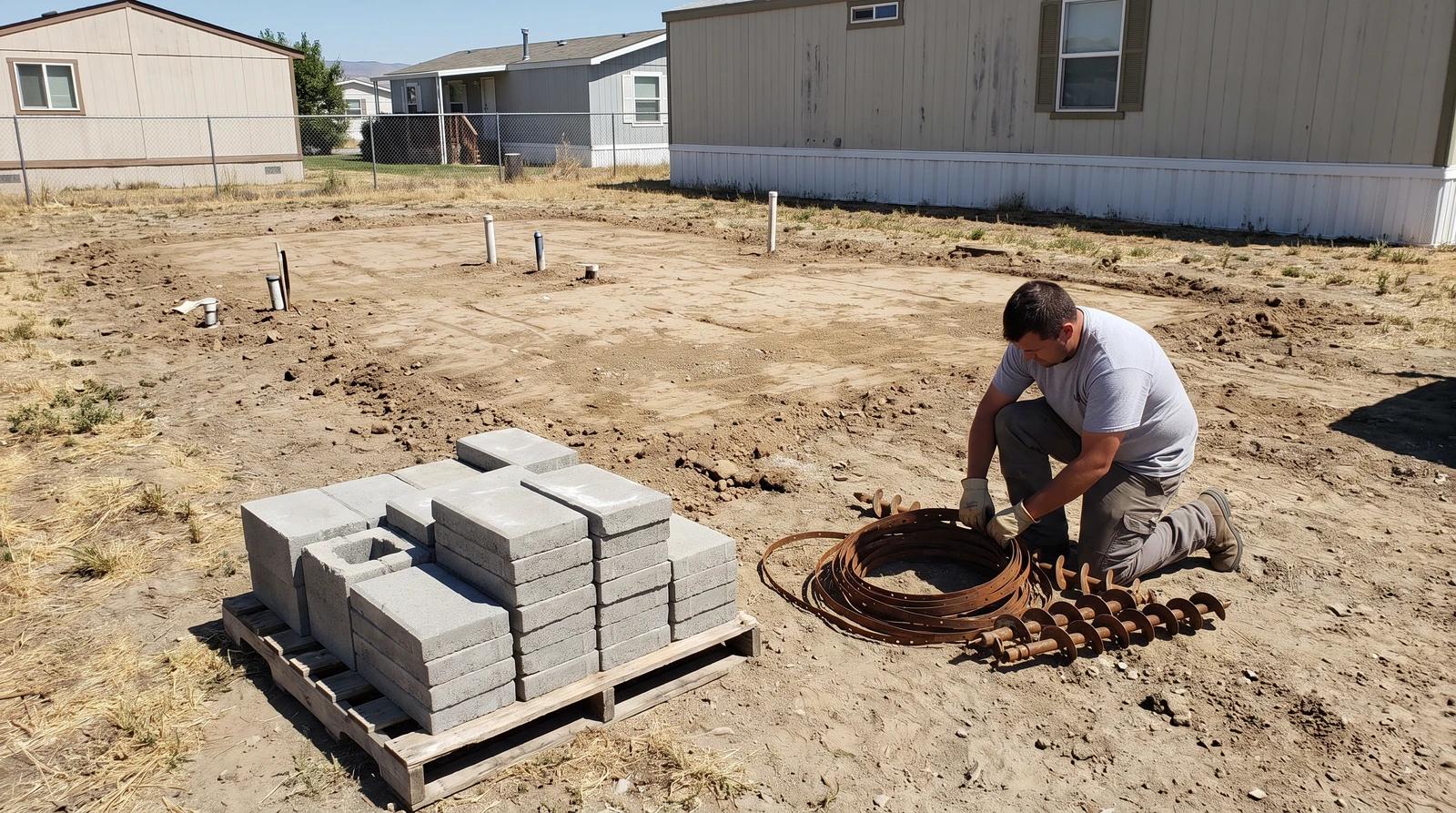
There may be concrete runners still sitting there. There may also be a field of block piers and a row of rusty anchor straps poking out of the dirt like weeds.
A lot of owners figure all that went with the house.
Fair enough. The house is the obvious part. What's holding it up usually isn't.
So here's what's actually under a mobile home, what happens to it during removal, and how to make sure it's in your price.
What's actually holding the house up
Most older mobile homes around the Treasure Valley sit on a pretty simple setup. Steel I-beams run the length of the home, and those beams rest on piers.
Piers are usually stacked concrete blocks with wood shims and a cap on top. Some homes sit on steel pier stands instead.
Either way, there are more of them than you'd think, especially under a double wide.
Under the piers you might find small pads, a pair of poured concrete runners or a full slab. It's not unusual to find all three in the same park, depending on when each home went in.
Then there are the tie-downs. Those are steel straps hooked to ground anchors, and they keep the home from shifting when the wind kicks up.
Out on the Bench and toward Kuna, that happens plenty. The anchors are screwed or driven into the ground, and some go down farther than you'd expect.
And don't forget the skirting. Vinyl, metal, wood lattice, and sometimes a patchwork of all three after years of repairs.
Does mobile home demolition in Boise include the foundation?
Honest answer? It depends on who you hire and what you ask for.
Some crews haul off the house and leave everything below the floor line. The home is technically gone, but you're stuck with a lot full of block, steel and concrete, and now you need somebody else to come back.
When we come out for a free estimate, we look under the home before we give you a number. How many piers, whether there's poured concrete, how the anchors are set, what the skirting's made of.
Your firm price spells out what's coming out and what's staying. No guessing on demo day.
Sometimes leaving part of it makes more sense.
If a new manufactured home is going on the same spot and the runners are in good shape, there's no reason to rip them out and pour new ones. Ask whoever is setting the new home before you decide.
Tip: Before your estimate, ask the park manager or whoever's setting your next home if they want the existing pads or runners left in place. Get the answer in writing. Leaving concrete is a lot easier than putting it back.
Pulling anchors and piers the right way
Anchors are where corners get cut. It's tempting to just snip the strap at ground level and call it good.
The trouble shows up later. Somebody digs there next, maybe a landscaper in Eagle or a crew setting a new home in Meridian, and they hit a buried steel anchor.
That can wreck equipment. A cut-off stub is also a real trip hazard in a yard with kids or dogs.
When the plan is a clean lot, we back anchors out or dig them free. If one's set too deep or locked in old concrete, we'll tell you straight and talk through what makes sense.
Piers are easier. Once the weight's off, the blocks come apart.
Clean block is often reusable, so a lot of it gets donated or recycled instead of heading to the Ada County landfill. Steel pier stands and anchor straps go to metal recycling.
Concrete runners and slabs take more work. They get broken up and hauled, which adds time and weight.
That's why we price by the space and the work involved. A flat number that ignores what's under the house doesn't do you any favors.
Weather, dirt and timing
The ground matters more than most people think.
In a hot, dry Boise summer, the soil around anchors bakes hard. They still come out, it's just slower going.
Winter's the opposite problem. Frozen ground out in Star or Middleton can lock an anchor in place until it thaws.
Spring is usually the sweet spot. The dirt has some give without turning into a mud pit.
On most single wides, the under-home work fits into the same visit as the teardown. A big double wide with poured runners can stretch things out a bit.
We'll give you a realistic timeline at the estimate. When it starts depends on the schedule, the size of the home and what's under it.
What to ask before any mobile home removal in Boise
Whoever you hire, ask them flat out what happens to the piers, anchors, skirting and concrete. A vague answer usually means it's not included.
Ask if the lot gets raked and leveled or just cleared. Those aren't the same thing.
Ask where the material goes. Somebody who knows what gets recycled and what gets donated has probably thought through the rest of the job too.
And ask whether the price is firm, and whether there are any fees that aren't on the quote.
The bottom line
The house is only half of a mobile home removal. What's under it can take just as much work, and it's the easiest part to leave out of a quote.
Get it spelled out before anyone starts. If you want us to take a look, give us a call at (208) 247-3193, and we'll walk the lot, check under the home and give you a straight price.
Get a Free Estimate
We'll come look at your mobile home and give you a complete price—no surprises, no hidden fees.
Call (208) 247-3193More From Our Blog
Mobile Home Demolition Boise: Asbestos in Older Trailers
Older trailers can hide asbestos in floors, ceilings and roof coatings. Here's what to check before mobile home demolition in Boise and the Treasure Valley.
Mobile Home Removal Boise: Utilities to Shut Off Before Demo
Before a mobile home comes down in Boise, the power, gas, water and sewer have to be handled. Here's who to call, what to cap, and what slows it down.
Mobile Home Removal in Boise When You Inherit an Old Trailer
Inherited a lot with an old trailer on it? What to sort out before mobile home removal in Boise: ownership, probate, the cleanout, utilities and permits.
