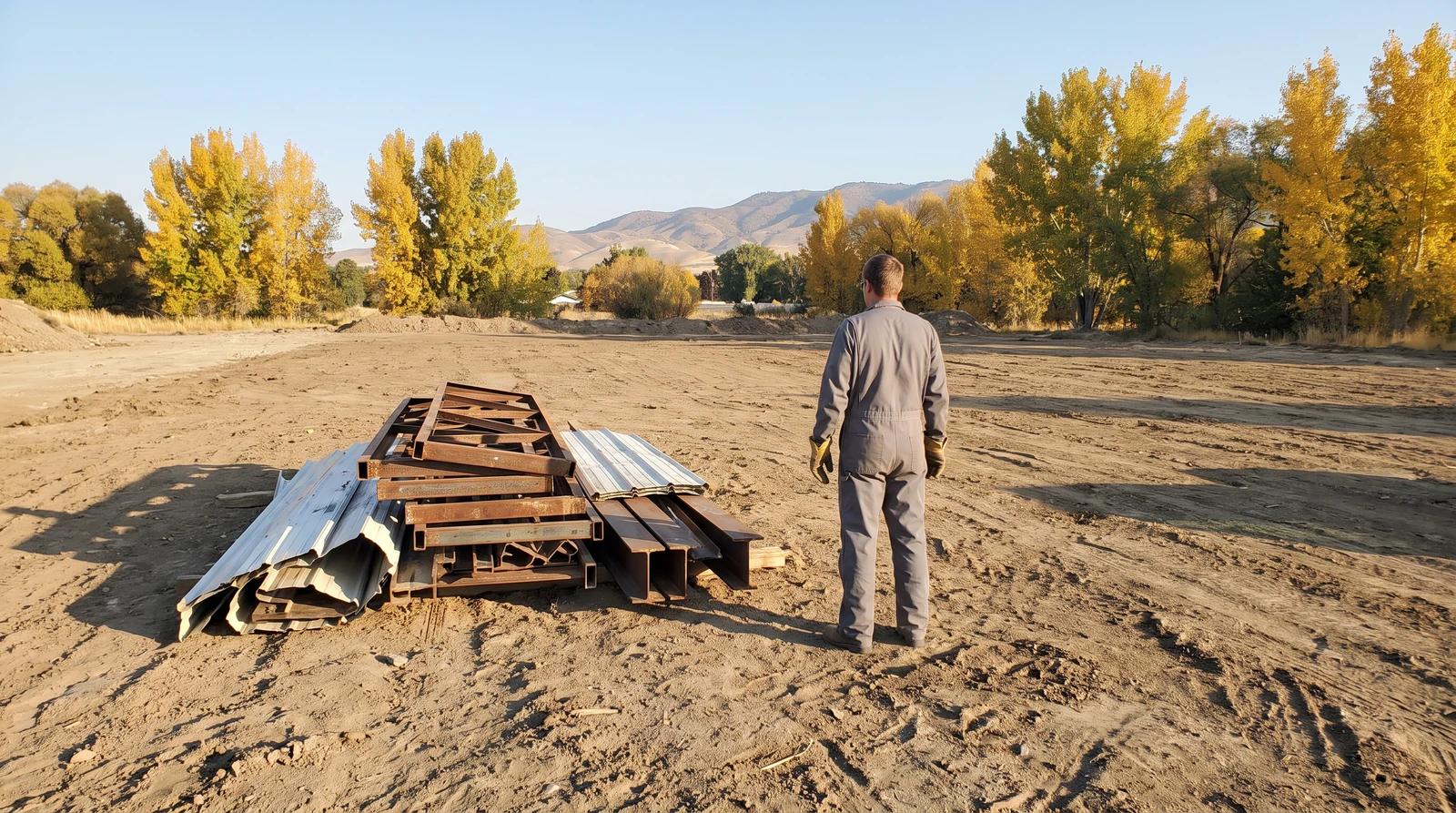
Mobile Home Demolition Boise: Best Time of Year to Schedule
Winter lots around the valley can be frozen hard at sunrise and turn to pudding on top by lunch. The trailer itself is usually the easy part.
Most people don't think about that when they plan mobile home demolition in Boise. The house comes apart about the same way in any month. What the season changes is the lot, the cleanup, and how long your property sits half-finished.
So when's the best time? Here's what we've seen, season by season, working lots all over the Treasure Valley.
Does the season matter for mobile home demolition in Boise?
Less than you'd think. We take down single wides and double wides all year, and how soon a job lands on the calendar usually depends more on permits, disconnects and access than on the month.
The weather still changes a few things. It decides how the ground holds up under equipment, whether dust becomes a problem with the neighbors, and how easy the lot is to grade for whatever comes next.
If your timing is flexible, those trade-offs are worth knowing. If it isn't, that's fine too. We'll work with the lot you've got.
Spring is mud season
March through May keeps us busy. People get back out to the property after winter, see the old trailer sagging a little more than last year, and pick up the phone.
The catch is water. Snowmelt and spring rain leave a lot of valley ground soft, especially low lots in Canyon County with irrigation ditches running close by. Heavy equipment on wet ground leaves ruts, and ruts mean more work at the end to get the site level again.
So we stage carefully. On some jobs we lay down mats. On others we take the sections near the soft spots apart by hand.
And once in a while we'll tell you straight that waiting for the ground to dry out is the smarter move. A short wait usually costs you less than fixing a torn-up yard.
Summer means dry ground and dust
June through August is the easiest stretch for the ground itself. Lots in Nampa and Caldwell are hard and dry, equipment rolls in clean, and grading goes fast once the home is gone.
The trade-off is heat and dust. An old mobile home is full of insulation, drywall and decades of grime, and all of it wants to blow around on a dry afternoon.
We start early, wet things down as we go, and keep loads covered. That matters most in tight spots, like the older parks around Garden City where the next home might be a few feet away.
Then there's fire risk. Dry cheatgrass and cutting tools don't mix, so we clear around the work area and keep water close. Do you need to do anything about it? Not really, though mowing the weeds down before we show up helps.
Fall mobile home demolition in Boise is the sweet spot
If you can wait, fall is our favorite. The ground is firm, the days are cool enough for steady work, and irrigation water shuts off in the fall across most of the valley, so the wet corners start drying out.
Fall also works well if a new manufactured home is going on the lot next year. Take the old one down in October, let the cleared pad sit over winter, and you're ready for setup in spring without fighting mud.
Tip: If you want a fall demo date, start the demolition permit and utility disconnects in late summer. The power company and the county or city run on their own schedules, and an unconfirmed disconnect is one of the most common reasons a demolition date slides.
People often call in early fall hoping to be done before the weather turns. Sometimes that works. The teardown itself is quick. The paperwork is what usually sets the pace, and whether you're in Ada County, Canyon County or inside city limits changes who signs off.
Winter mobile home removal in the Treasure Valley
Yes, we work in winter. Frozen ground can hold equipment surprisingly well, as long as we do the heavy work early in the day before things soften.
There are headaches, though. Snow hides debris, so cleanup takes more care. Days are short. And a trailer that sat empty all winter often has burst water lines, which means a soaked, heavy subfloor that's messier to break down and haul out.
When the ground just won't cooperate, we'll sometimes split the job. The home comes down and gets hauled off, and we come back for final grading once the lot has thawed and dried. If we think your job needs that, you'll hear it at the estimate, not after.
Winter tends to be quieter for us, too, so getting on the schedule is usually quick.
Bottom line: the best time for mobile home demolition is whenever it fits your plans for the property. With no deadline, fall is easiest on your lot. With one, every season works with a little planning. Honestly, the thing that matters most is getting permits and disconnects moving early.
If you want a second set of eyes on your lot, we'll come out for a free estimate and give you a firm price before anything gets touched. Price depends on the size of the home and the work involved, with no hidden fees. We take cash, card and Venmo, and as much of the old home as possible gets donated or recycled. Call us at (208) 247-3193 whenever you're ready to talk it over.
Get a Free Estimate
We'll come look at your mobile home and give you a complete price—no surprises, no hidden fees.
Call (208) 247-3193More From Our Blog
Mobile Home Demolition Boise: Asbestos in Older Trailers
Older trailers can hide asbestos in floors, ceilings and roof coatings. Here's what to check before mobile home demolition in Boise and the Treasure Valley.
Mobile Home Removal Boise: Utilities to Shut Off Before Demo
Before a mobile home comes down in Boise, the power, gas, water and sewer have to be handled. Here's who to call, what to cap, and what slows it down.
Mobile Home Removal in Boise When You Inherit an Old Trailer
Inherited a lot with an old trailer on it? What to sort out before mobile home removal in Boise: ownership, probate, the cleanout, utilities and permits.
